The Power of ISPS: Turning Psychology into Profit
Most landscape companies lose jobs for one main reason: the homeowner gets confused or overwhelmed and just picks the cheapest option to make the decision easier.
We built Elevation Advisor to fix exactly that.
Instead of giving the customer one flat price or a confusing spreadsheet, every proposal you create automatically uses a system we call ISPS (Integrated Sales Psychology & Strategy.)
- You don’t have to learn psychology
- You don’t have to become a better salesperson
- You don’t have to add extra pages or fancy language
You just build the proposal the normal way, list the scope, pick your prices, choose your packages, and the system quietly applies proven buyer psychology principles so the customer:
- feels less confused
- trusts you more
- sees clear value in the middle and higher options
- feels good about spending more money with you
The result: higher close rates and higher average project sizes… without you ever feeling like you’re “selling”.
That’s the whole point of ISPS and why it is at the heart of Elevation Advisor’s proposal system. It's a framework designed to help contractors close more deals, even if they’re not natural salespeople.
Rather than presenting a single price that might trigger hesitation or sticker shock, ISPS encourages you to offer structured choices through customizable packages:
- Good, Better, Best, and Premium tiers.
- Built using checkboxes to include or exclude specific sections like patios, beds, or irrigation.
- Gives you full control over what’s shown in each package and how value is presented.
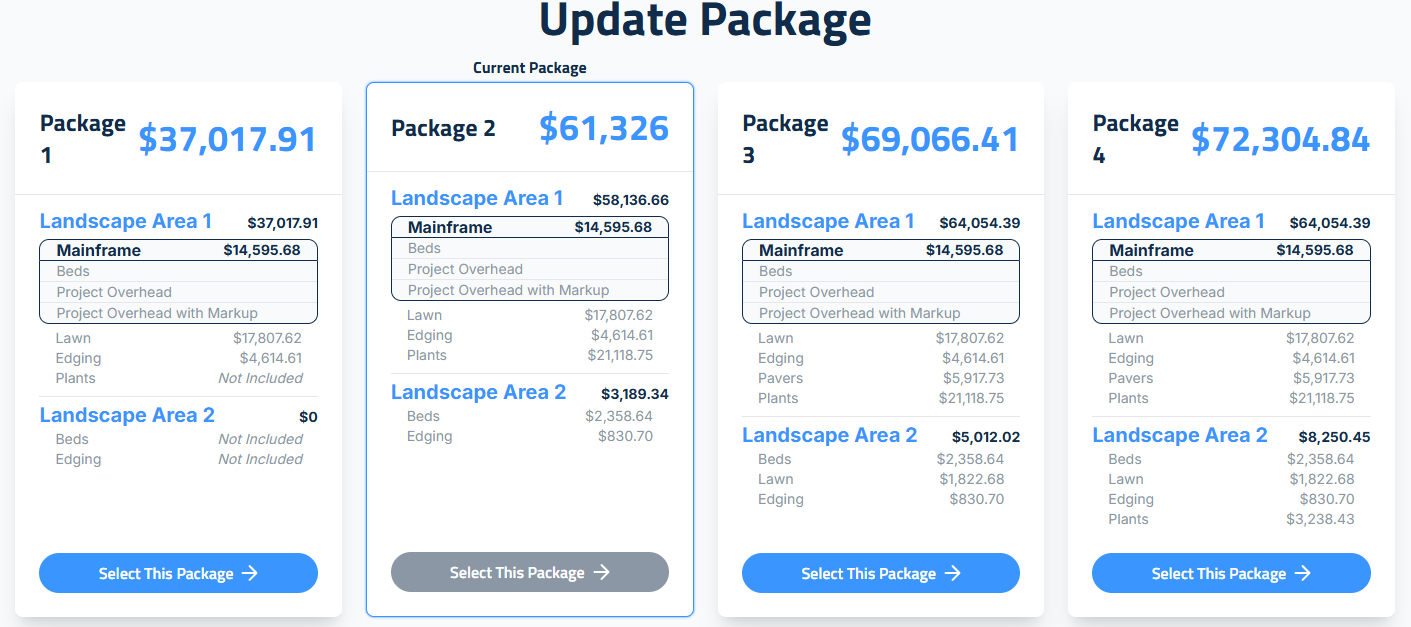
The Science of Choice: Good, Better, Best, Premium
Offering multiple tiers, Good, Better, Best, and Premium, is the most effective way to sell because it shifts the client's mindset from "Should I do this project?" to "Which version of this project do I want?" This strategy leverages three core psychological principles:
1. The Anchor Effect
Humans rely on the first piece of information offered to make comparisons. By including a Premium tier, you set a high-price "anchor." This makes the Best and Better options feel significantly more affordable and reasonable by comparison, even if they are high-ticket items.
2. Extremeness Aversion (The Compromise Effect)
Most buyers are naturally risk-averse; they fear the Good package might be "cheap" or insufficient, while the Premium might be overkill. This pushes the majority of clients toward the Better and Best options, the "Goldilocks" zone, where they feel they are getting high value without overspending.
3. Eliminating Analysis Paralysis
A single price creates a "Take it or Leave it" ultimatum, which often leads to the client seeking a second opinion. Conversely, too many options lead to confusion. A structured 4-tier system provides enough variety to give the client a sense of control and autonomy without overwhelming them, leading to faster decision-making and higher close rates.
Why Tiered Pricing Wins
Strategy | Client Mindset | Outcome |
|---|---|---|
Single Price | "Is this price fair? I should shop around." | High Friction; Price Shopping |
Good/Better/Best/Premium | "Which level of value fits my lifestyle?" | Low Friction; Higher Average Ticket |
Custom Groups: Strategic Organization
This feature allows you to bundle multiple Sections together and present them to the client as a multiple line items with one price. For example, Mobilization, Irrigation, Build Up and Removal can be added to a Custom Group called "Mainframe," showing a single price of $7,787.28. This approach reduces negotiation friction and helps minimize sticker shock.
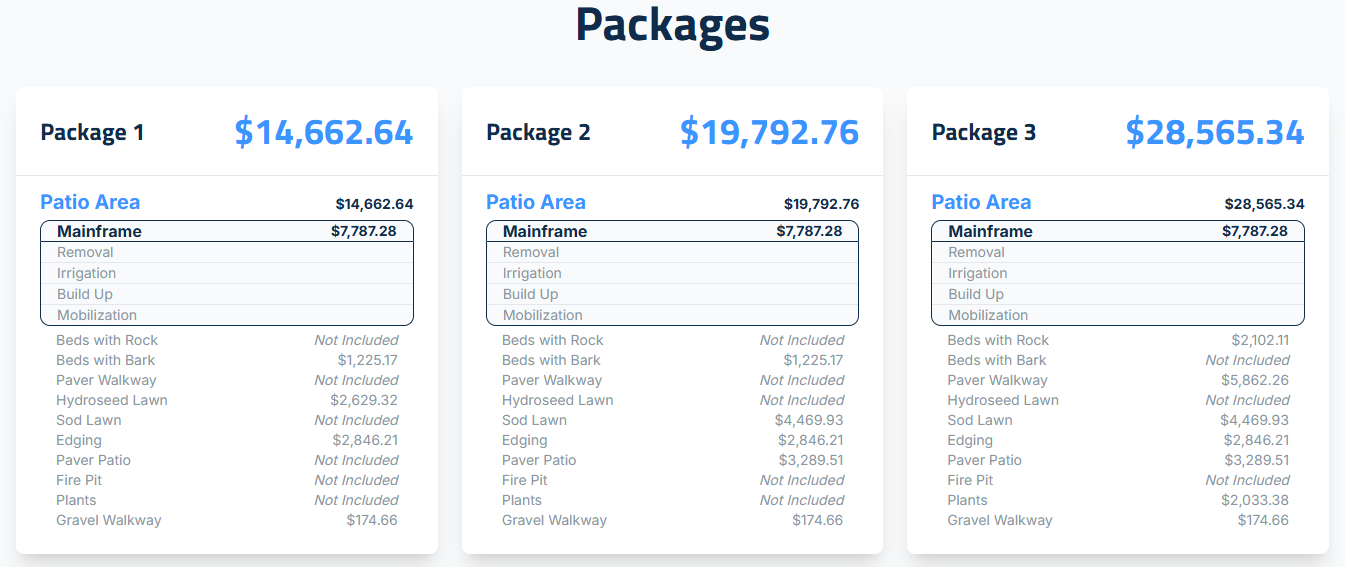
To enhance customer understanding and improve sales outcomes, we recommends using built-in ISPS tools to rename Project Overhead to something like Mobilization and organize it within a custom group with a label like "Mainframe." This strategic repackaging improves transparency while preventing client confusion and reducing proposal clutter. The client sees that Mobilization is included, but there isn't a single price for it; the cost is wrapped up into the "Mainframe" group, which represents the essential work required to take on the project. This approach maintains focus on value-driven deliverables and presents a streamlined proposal narrative.
The Science of Choice
ISPS is grounded in behavioral economics and decision science. It works by reducing decision fatigue and empowering clients with control. Research shows that when people are given a range of options, they tend to gravitate toward the middle or second-highest choice, a phenomenon known as the “Goldilocks effect.”For example:
A $25,000 patio might feel expensive on its own, but when presented alongside a $15,000 basic version and a $35,000 premium upgrade, it becomes the most reasonable and appealing choice.
Building Trust Through Transparency
This structure not only increases close rates, but also boosts average project value while building trust through transparency and low-pressure engagement. One effective tactic is to ask hesitant clients: “Do you know if you’ll use our company for something?”
If they say yes, suggest starting with the basic package to lock in a calendar spot, with the option to upgrade later. This approach:
- Removes pressure.
- Creates momentum.
- Often leads to clients choosing higher-tier packages once they feel more comfortable.
ISPS Strategies That Drive Sales
These tactics reflects the core pillars of Integrated Sales Psychology and Strategies (ISPS):
🎯 Presenting value, not cost
🎯 Reducing buyer friction
🎯 Structuring proposals for higher close rates
Key Takeaways:
- Use a Low-Cost Anchor: Always include a basic package to make mid- and high-tier options feel more valuable.
- Frame Upgrades Around Lifestyle Benefits: Sell the experience—a “backyard oasis for family gatherings” resonates more than “includes lighting and irrigation.”
- Guide, Don’t Push: Use open-ended questions to invite commitment without pressure.
- Normalize the Upgrade: Reference what “most clients choose” to create social proof and reduce hesitation.
Updated on: 02/09/2026
Thank you!